
Manufacturing Robots: Benefits, Uses, and Future Trends
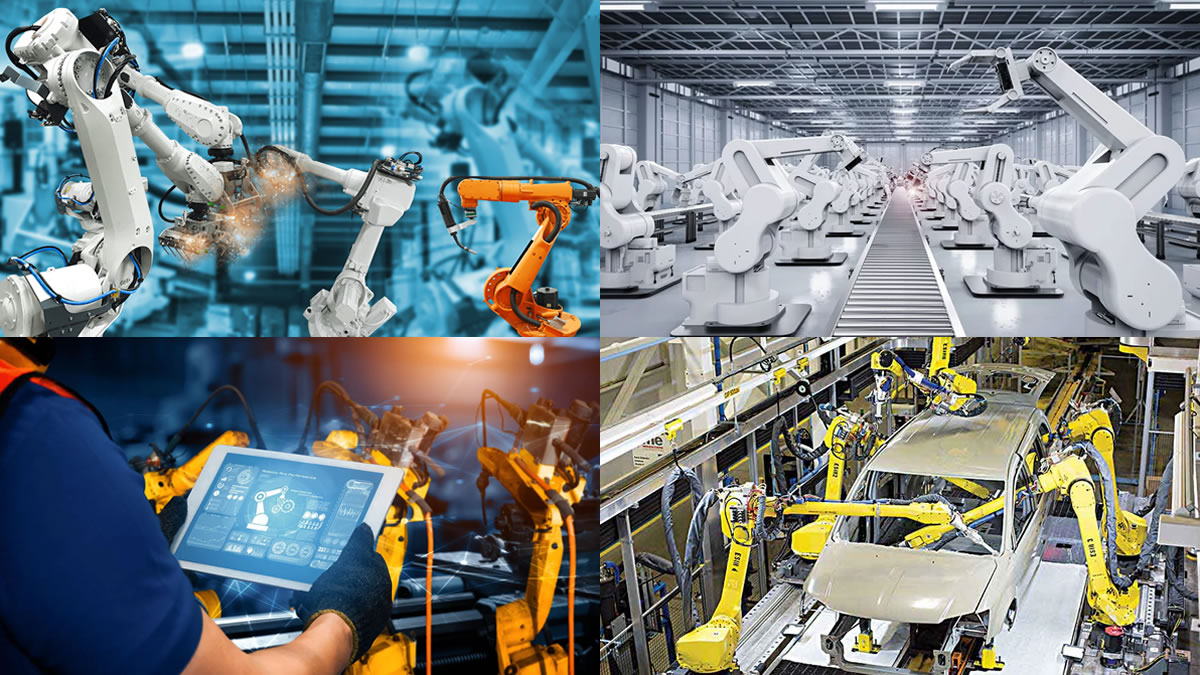
Manufacturing robots are programmable machines that perform tasks in factories with speed and precision. These industrial robots handle jobs like welding, assembly, painting, and material handling. They work 24/7 without breaks, making production faster and cheaper.
Factories worldwide installed over 500,000 robots in 2022. That number keeps growing as more companies see the value. Robotic automation isn’t just for big corporations anymore. Small and medium businesses now use these machines too.
What Are Manufacturing Robots
Manufacturing robots are automated machines designed to perform specific production tasks without human intervention. They use sensors, controllers, and programmed instructions to complete repetitive work with consistent quality. Modern robots can adapt to different tasks through reprogramming.
Think of them as tireless workers on your production line. They don’t call in sick or need lunch breaks. Industrial robots come in various sizes, each built for specific jobs.
The basic robot has three main parts. A controller acts as the brain. Mechanical arms provide movement. Sensors gather information about the environment.
Types of Manufacturing Robots
Articulated Robots
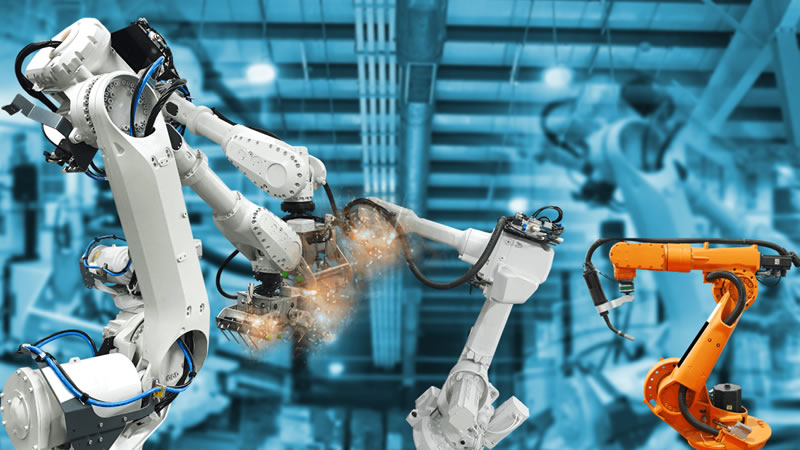
Articulated robots have multiple joints like a human arm. They rotate and bend to reach different positions. Most have six axes of movement, giving them incredible flexibility.
These robots excel at welding, painting, and assembly work. Car manufacturers love them for spot welding tasks. One robot can complete a full vehicle welding cycle in 85 seconds.
Read more Mind-Blowing Scientific Discoveries of All Time
SCARA Robots
SCARA stands for Selective Compliance Assembly Robot Arm. These robots work fast on horizontal surfaces. They’re built for speed in electronics manufacturing.
A SCARA robot can place 30,000 tiny components per hour. They position parts with accuracy down to 0.01 millimeters. Electronics manufacturing plants use them for circuit board assembly.
Delta Robots
Delta robots have three arms connected to a single base. They move in parallel, creating incredible speed. Food, beverage, and pharmaceutical companies rely on them heavily.
These robots sort pills, pack chocolates, and handle delicate items. They perform hundreds of pick-and-place movements per minute.
Collaborative Robots
Cobots work safely alongside humans without safety cages. They have built-in sensors that detect nearby workers. If someone gets too close, the robot slows down or stops.
Small businesses love cobots for their flexibility. One day they’re packing boxes, the next they’re loading machines. The ease of reprogramming makes them versatile.
Mobile Robots
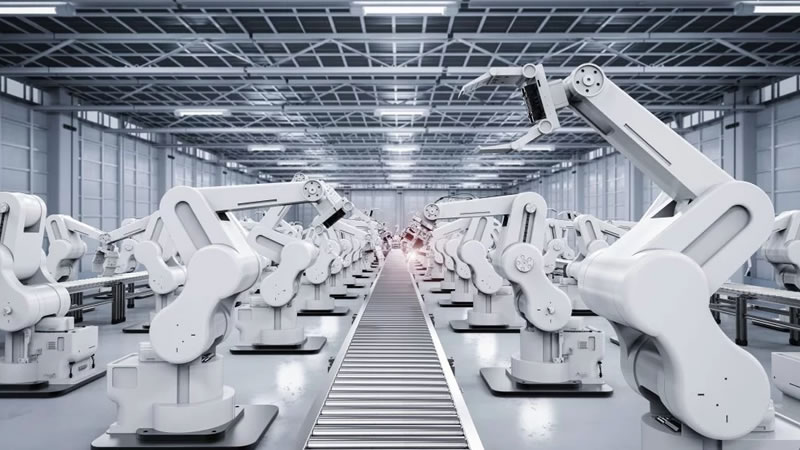
Autonomous mobile robots navigate factory floors independently. They transport materials, parts, and finished goods without fixed paths. Built-in sensors help them avoid obstacles and people.
Warehouse automation relies heavily on these machines. They reduce the need for forklifts and manual material handling.
Read more 11 Must-Have Productivity Apps for 2026 | Complete Guide
Benefits of Robotics in Manufacturing
Increased Productivity
Robots work continuously without fatigue or breaks. One robot replaces multiple shift workers in many cases. Production speeds up significantly when machines handle repetitive tasks.
Manufacturing efficiency jumps when robots take over assembly lines. Companies report productivity gains of 30-50% after installing robots.
Better Quality Control
Robots don’t make mistakes from boredom or tiredness. They perform each task the same way, every single time. Quality control improves dramatically with robotic automation.
Defect rates drop when robots handle precision work. Manufacturing companies see fewer returns and complaints.
Enhanced Worker Safety
Robots handle dangerous jobs that put humans at risk. Heavy lifting, toxic chemicals, and high temperatures become robot territory. Worker safety improves when machines take over hazardous tasks.
The automotive manufacturing sector cut injuries significantly with robotic welding. Workers no longer breathe welding fumes or risk burns.
Cost Savings
Robots cost money upfront but pay back quickly. Labor costs drop when one robot replaces several workers. Manufacturing companies calculate ROI in months, not years.
The US Air Force saved $220,000 per F-22 jet using robotic painting. That’s $8.8 million total. Less waste, fewer man-hours, better results.
Greater Flexibility
Modern robots adapt to new tasks through reprogramming. Cobots switch jobs in minutes, not days. Manufacturing flexibility matters when customer demands shift quickly.
Production lines reconfigure faster with modular robotic systems. Launch new products without rebuilding entire factories.
Read more Entrepreneur Networking: 10 Tips for Success
Applications Across Industries
Automotive Manufacturing
Automotive plants pioneered industrial robotics decades ago. They still lead in robot adoption. Every major car brand uses thousands of robots.
Robotic welding joins car body panels with perfect precision. Paint robots apply even coats without runs or drips.
Electronics Manufacturing
Electronics companies need extreme precision for tiny components. SCARA robots and Delta robots dominate this space. They place microscopic parts on circuit boards flawlessly.
Smartphone production would be impossible without robots. Human hands can’t work that small or that fast.
Food and Beverage
Food manufacturing demands cleanliness and speed. Robots meet both requirements. They sort, cut, pack, and palletize food products safely.
Beverage bottling lines run almost entirely on robotic automation. Production rates hit thousands of units per hour.
Pharmaceutical Manufacturing
Pharmaceutical companies face strict quality and safety rules. Robots help them comply while boosting output. Pill sorting, packaging, and material handling all go robotic.
Drug makers report fewer errors after installing robots. Dosages stay accurate, packaging stays clean.
Industry 4.0 and Smart Factories
Industry 4.0 connects robots with other factory systems. Real-time data flows between machines, creating smart factory environments. Manufacturing becomes more responsive and efficient.
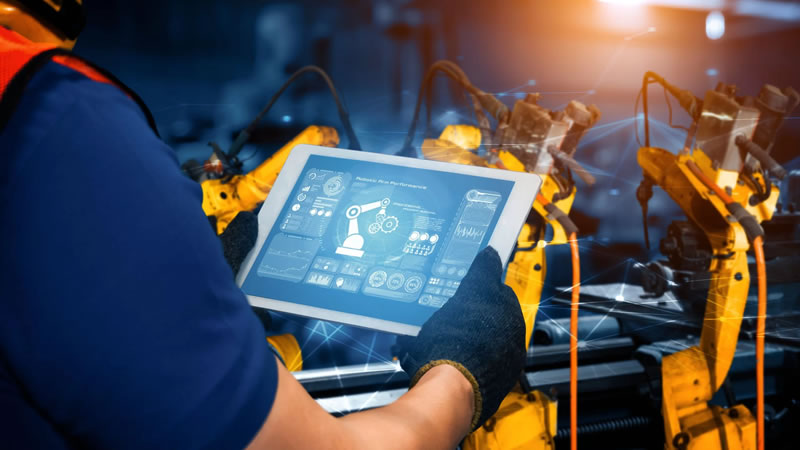
Robots collect data while working. That information feeds into analytics systems for process improvement. You spot problems before they cause downtime.
AI and machine learning make robots smarter over time. They learn optimal paths, speeds, and techniques.
What is the main purpose of manufacturing robots?
Manufacturing robots perform repetitive tasks with speed and precision that humans can’t match. They increase production rates, improve quality, and reduce labor costs. Robots handle dangerous jobs, keeping workers safer while boosting efficiency.
How much does a manufacturing robot cost?
Robot prices range from $25,000 for basic cobots to $400,000 for advanced industrial robots. Installation adds 20-30% to base costs. Most companies achieve payback within 2-3 years through labor savings and increased productivity.
Can small manufacturers afford robots?
Yes, collaborative robots make automation affordable for small businesses. Cobot prices start around $25,000 with minimal installation costs. Leasing options spread costs over time.
Do robots replace human workers?
Robots change jobs rather than eliminate them. Workers shift from repetitive tasks to robot operation and maintenance. Manufacturing companies often struggle to find enough workers. Robots fill gaps while creating higher-skilled positions.
What industries use robots the most?
Automotive manufacturing leads robot adoption with 33% of global installations. Electronics, metal and machinery, plastics, and food industries follow closely. The pharmaceutical and aerospace sectors are rapidly growing in robot usage.