How Virtual Reality Can Improve Research Validity and Results
Most people think virtual reality is just for gaming. That’s a fair assumption. But it’s also completely wrong. Right now, researchers across the globe are putting on headsets and solving problems that pen-and-paper methods never could.
The truth is, VR research is growing fast. And if you’re in healthcare, product design, archaeology, or urban planning, it’s already knocking on your door.
Who Actually Uses Virtual Reality for Research
The short answer: a lot more people than you’d think. Virtual reality in research has moved well beyond labs and universities. It’s now used across industries where accuracy, control, and repeatability matter most. Medical professionals use VR clinical simulation to study patient outcomes without putting anyone at risk.
Nursing schools run mock emergency scenarios. Surgeons rehearse complex procedures in a safe space. Auto manufacturers like Renault, SEAT, and Land Rover use VR product development research to test new car designs before spending a single pound on physical builds. Renault alone saves over 1.7 million pounds a year this way.
Archaeologists and historians use virtual reality in archaeology to rebuild ancient sites. The Giza Project created a 3D model of the Giza Plateau as it looked in 2500 BCE. That’s not a gimmick. That’s research you simply can’t do any other way. Urban planners use virtual reality geographical information systems (VRGIS) to model cities, run environmental impact assessments, and test infrastructure ideas before anything gets built.
What Is VR Research and Why Does It Matter?
VR research means using virtual reality tools to collect data, run experiments, test products, or present findings. It matters because traditional research has a big problem: it often can’t be repeated with the same results.
Read more Stop wasting time — 5 real productivity tips
A 2015 study found that only 33 percent of psychology research papers could be successfully repeated by other researchers. That’s a reliability crisis. And it’s not limited to psychology. Virtual reality for research attacks this problem directly. It lets researchers control the environment, repeat the same conditions, and get consistent, comparable results. Think of it as turning a messy natural experiment into a clean one.
How VR Improves Research Validity
Here’s where it gets interesting. Ecological validity means your study needs to reflect the real world. But studying the real world is messy. You can’t control a hospital room, a war zone, or a natural disaster. Virtual reality research tools solve this. They let you build a controlled version of the real world. You set the variables.
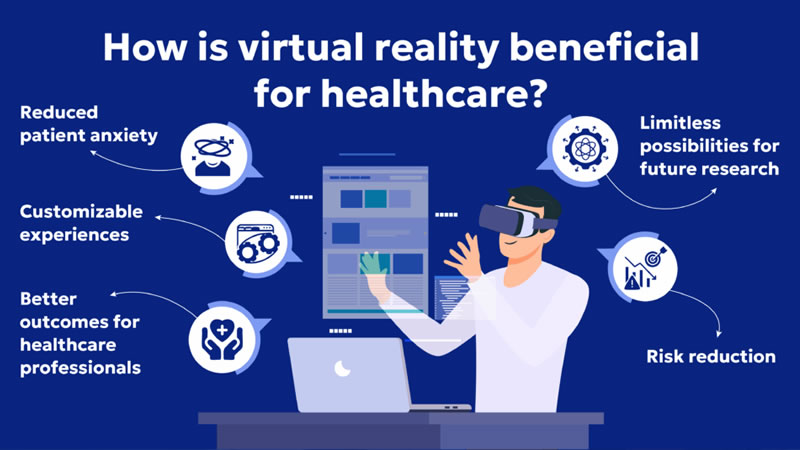
You repeat the test as many times as you need. You get data that actually holds up. Take nursing as an example. Studying how nurses respond when a patient crashes is almost impossible in a real hospital. A VR clinical simulation removes all of that noise. Same patient, same crash, same room, every single time.
How VR Cuts Research Costs
Money talks. And the cost savings from VR in product research are hard to argue with. SEAT cut its physical prototype count by 50 percent. Land Rover saved 3.5 million pounds in five weeks. Lockheed Martin saves around 8 million pounds a year using virtual reality technology to test designs.
That’s not just about saving money. It’s about speed. Faster testing means faster decisions. Faster decisions mean faster products on the market.
Read more 6 Startup Lessons from Successful Founders That Actually Work (2026 Guide)
VR and Data Presentation
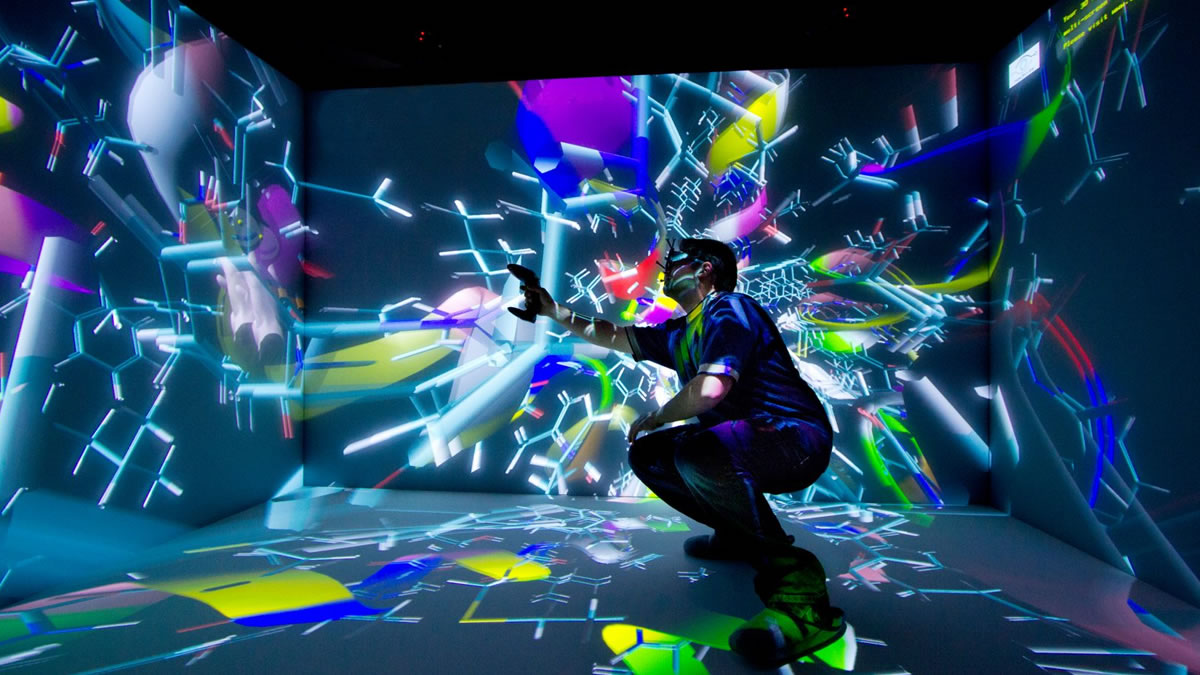
One part of VR research that doesn’t get enough attention is how it changes the way findings are shown. A flat bar chart is fine. But imagine walking inside the data instead. VRGIS lets researchers visualise multi-variable data in three dimensions. You can see how traffic flows change when a new road is added. You can watch how a forest responds to a change in rainfall over fifty years. All in real time.
Google Labs did this with Brexit data. The Guardian put people inside a solitary confinement cell using virtual reality data presentation. These aren’t stunts. They’re a direct way to make research land with people who’d never sit down and read a 40-page report.
The Future of Virtual Reality in Research
The future of VR in research is bigger than any single use case. The technology is still in its early stages. Processing power keeps climbing. Headsets keep getting cheaper. In 2016, 70 percent of the world’s top brands poured 1.2 billion pounds into VR. By 2025, the market is expected to hit over 85 billion pounds.
Small businesses are in the game too. If your competitors haven’t started thinking about VR research applications, they will soon.
Read more Marketing Campaign Plan That Converts (Step-by-Step)
Who uses virtual reality for research?
Medical professionals, auto manufacturers, archaeologists, urban planners, and defence companies all use virtual reality for research. It’s most common in fields where controlling variables and repeating experiments are critical to getting accurate results.
How does VR improve research accuracy?
Virtual reality research improves accuracy by giving researchers a controlled, repeatable environment. The same conditions can be recreated exactly, which reduces human error and produces consistent data that holds up under scrutiny.
What is VR clinical simulation used for?
VR clinical simulation is used to train medical staff and study how they behave in high-pressure situations, like when a patient’s condition deteriorates fast. It removes real-world risk while keeping the scenario realistic.
Can small businesses use VR for research?
Yes. The cost of virtual reality technology has dropped significantly. Small businesses can now run product testing, gather customer feedback, and present data using VR without needing the budget of a multinational company.
What is VRGIS, and how is it used in research?
VRGIS stands for virtual reality geographical information systems. It’s used in urban planning, ecology, archaeology, and the military to model environments, run impact assessments, and visualise complex data sets in three dimensions.