
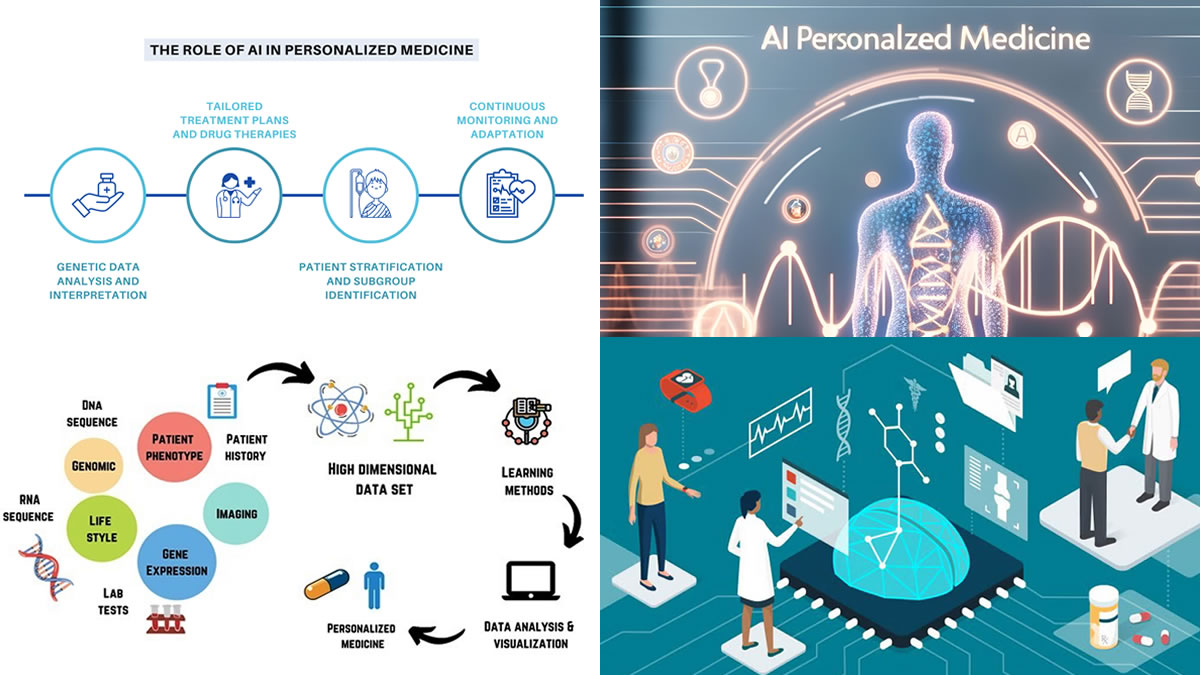
AI in Precision Medicine: Personalized Healthcare Future
Healthcare is changing fast. AI and Precision Medicine are at the center of this change. These tools help doctors provide Personalized Health Care for each patient. By combining Artificial Intelligence in healthcare with patient data, treatment becomes smarter, faster, and more precise.
What is Precision Medicine?
Precision Medicine tailors treatment to each individual. It uses Electronic Health Records, Genomics, and Big Data Analytics to guide decisions. This approach predicts health risks, suggests better treatments, and tracks outcomes more accurately. Patients no longer get generic care. They get care designed just for them.

The Role of AI in Patient Care
Artificial Intelligence in healthcare makes sense of complex patient information. Machine Learning in Medicine identifies patterns in Clinical Decision Support Systems, analyzes Multimodal Data, and helps with Personalized Diagnosis and Prognostication. Hospitals now combine lab, imaging, and genetic data to deliver care that fits each person.
Read more Manufacturing Robots: Complete Guide & Benefits
Trends in Healthcare AI
Healthcare AI Trends show rapid adoption of AI-powered Clinical Decision Making. AI predicts disease risk, monitors treatment progress, and gives doctors insights impossible before. Ensuring Data Security and Privacy in Health AI builds patient trust and meets regulatory standards.
Data-Driven Personalized Care
Data-driven Personalized Care goes beyond treatment. It considers Clinical and Behavioral Determinants of Health. Doctors can suggest lifestyle changes, monitor chronic conditions, and adjust medication based on real-time data. Combining Machine Learning in Medicine with patient feedback creates a continuous improvement loop.
How Augmented Intelligence Helps Doctors
Augmented Intelligence supports, rather than replaces, doctors. It provides relevant insights from Electronic Health Records Data. Physicians focus on patient interaction while AI handles complex calculations and predictions.
Multimodal Data Integration in Precision Medicine
Multimodal Data Integration is crucial for Precision Medicine. Hospitals combine imaging, genetics, lab results, and patient history for a complete health overview. Using Genomics and Precision Medicine, doctors find unique treatment paths for each patient.

Challenges of AI in Healthcare
Implementing AI comes with challenges. Data quality, staff training, and regulatory approval are key concerns. Hospitals address these issues carefully to ensure that AI-powered Clinical Decision Making improves outcomes while protecting Electronic Health Records.
Clinical Decision Support Systems
Clinical Decision Support Systems powered by AI are becoming standard. They help doctors interpret complex information. By using Multimodal Data for Patient Care, physicians can anticipate complications before they occur. These systems reduce errors and improve care accuracy.
Personalized Health Care in Action
Personalized Health Care means treatment designed for the individual. Every recommendation relies on Big Data Analytics, Machine Learning in Medicine, and real-time monitoring. Doctors now treat the patient, not just the disease.
Read more Mind-Blowing Scientific Discoveries of All Time
Importance of Electronic Health Records
Electronic Health Records Data is the backbone of AI in healthcare. It stores patient history, lab results, and genetics. When combined with Artificial Intelligence in healthcare, hospitals deliver smarter care and predict health risks before symptoms appear.

Why Big Data Matters
Big Data Analytics processes large amounts of patient information. It supports Precision Medicine, enhances Personalized Diagnosis and Prognostication, and improves decision-making. Hospitals can now provide targeted care backed by real data.
The Future of Healthcare Transformation
Healthcare Transformation is happening today. From Precision Medicine to Augmented Clinical Insights, AI is helping doctors improve outcomes. Patients experience faster recovery, fewer errors, and care that adapts to their needs.
What is Precision Medicine?
Precision Medicine is medical care tailored to an individual. It uses genetics, health records, and lifestyle to guide treatment. This approach provides more accurate, effective, and Personalized Health Care than traditional methods.
How does AI help in healthcare?
AI in healthcare analyzes data to predict risks, suggest treatments, and monitor outcomes. Tools like Clinical Decision Support Systems improve decisions and reduce errors. It enables Data-driven Personalized Care.
What is Personalized Health Care?
Personalized Health Care is treatment designed for the individual. It relies on Multimodal Data Integration, Genomics, and Electronic Health Records Data to provide targeted care and better results.
What are the challenges of AI in medicine?
Challenges include data privacy, staff training, and regulatory compliance. Hospitals address these by securing Electronic Health Records and implementing AI-powered Clinical Decision Making carefully.
Why is Big Data important in healthcare?
Big Data Analytics allows doctors to handle vast patient information. It supports Precision Medicine, improves diagnoses, and enables Personalized Diagnosis and Prognostication.