

AI Productivity Tools in 2026: How AI Is Changing the Way We Work
Ai productivity tools in 2026: The impact of AI on daily work is transforming the landscape.AI is reshaping the way people work today. The right tools help you complete tasks quicker, like research, writing, planning, organizing data and communicating.
AI productivity tools are particularly beneficial for professionals, business owners, marketers, and product teams. People are now employing AI not just to create content, but also to organize information, automate repetitive tasks, oversee projects, and make informed decisions.
It’s not about the sheer number of AI tools. What is a better way than to identify tools that actually help to solve problems and save time?.
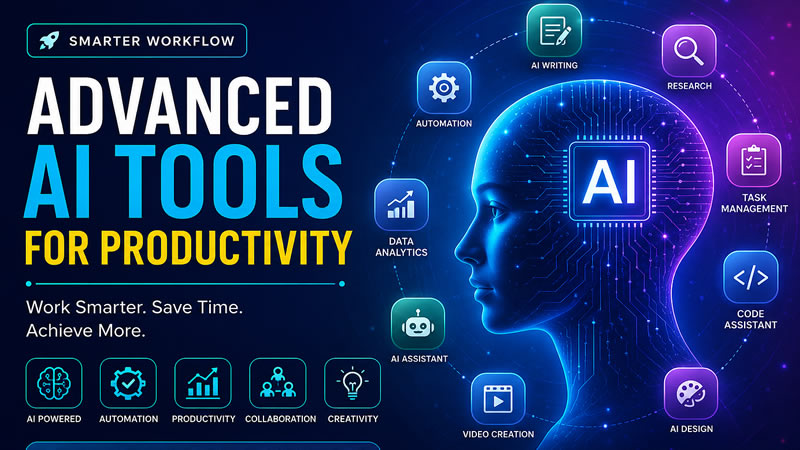
AI productivity tools: How AI Productivity Tools Are Changing Modern Work
The growing use of AI productivity tools is transforming team ways of working and routine activities. AI can automate various repetitive tasks that used to be time-consuming and manual.
For instance, an AI assistant can summarize lengthy documents, draft initial emails, take meeting minutes, or compile actionable items from a conversation.
AI productivity is becoming an important part of modern work. New tools and features are helping users automate repetitive tasks, organize information, and improve their daily workflows. If you want to explore the latest AI productivity tools updates, you can also check out our detailed guide to the newest tools and productivity features.
Another way businesses are leveraging AI is by incorporating it into existing software instead of as a standalone entity.
Common applications include:
• Writing and editing
• Research and summarization
• Meeting notes
• Project planning
• Customer support
• Data analysis
• Content creation
• Workflow automation
This enables workers to dedicate less time to repetitive work and more time to creative, judgment and decision-making work.
AI tools for product managers: How AI Tools Are Helping Product Teams
Product managers often have to manage customer feedback, market research, product planning, documentation, communication, and prioritization at the same time.
This is where AI tools for product managers can become particularly useful.
AI can be used to sort through customer feedback, look for common issues, review research, create product summaries, draft product briefs, and generate preliminary concepts for new features, providing valuable support for product teams.
For instance, an AI system can analyse customer feedback from hundreds of people and show a product team the most prevalent issues.
AI tools can also help with product documentation and planning by generating a initial outline, organizing information, and aiding in comparing various concepts.

While all these decisions must ultimately be made by seasoned product experts, AI can help minimize the manual workload for reaching such decisions.
Best AI tools for product managers: What Should You Look For?
Choosing the best AI tools for product managers isn’t simply about finding a platform with the largest number of features.
A useful tool should solve a specific product-management problem and fit naturally into the team’s existing workflow.
Important areas to consider include:
- Customer research
- Product documentation
- Feature planning
- Market research
- Task management
- Data analysis
- Team communication
A startup may need a simple AI research assistant, while a larger company may benefit from AI integrated into its project-management, analytics, or customer-feedback systems.
The best solution is therefore the one that provides measurable value rather than simply having the most advanced features.
Ai productivity tools in 2026: How AI Can Improve Everyday Business Tasks
The benefits of AI productivity extend beyond product teams. Apart from marketing, AI also has the potential to automate repetitive tasks for sales, customer service, operations, and HR teams.
AI can help marketing teams prioritize campaign concepts and evaluate customer feedback. It can be utilized by sales teams to take notes and draft emails for follow-up. AI can streamline information organization and detect workflow bottlenecks for operations teams.
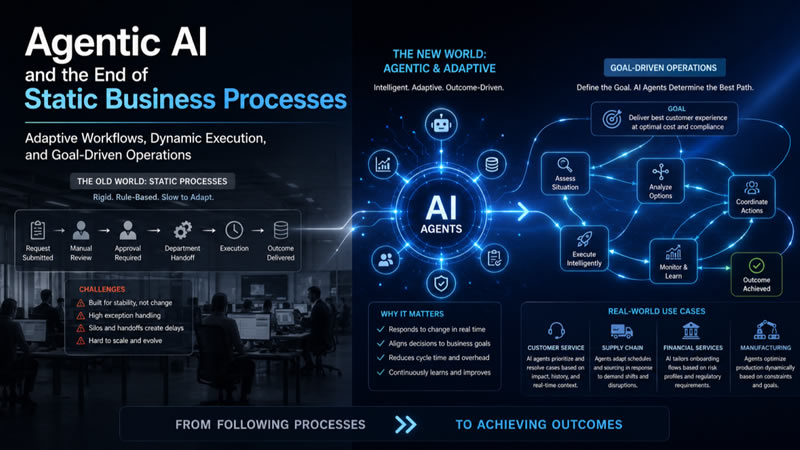
The primary advantage is when AI eliminates tedious manual tasks without introducing new and complex tools into the process.
AI product marketing: How AI Is Changing Product Marketing
AI is becoming an important part of modern marketing workflows. Instead of relying entirely on manual research, writing, and analysis, marketing teams can now use AI to speed up many parts of the process.
With ai product marketing Teams can review customer interests, brainstorm ideas for campaigns, review market research, and draft initial marketing messages.
AI productivity tools can help businesses reduce repetitive work, organize information, improve collaboration, and save time. For example, AI productivity tools for work can support writing, research, meetings, data analysis, and everyday business tasks.
The greatest benefit is speed. The marketer can now generate multiple campaign ideas in a short span of time and focus more time on reviewing, refining and testing the best campaign.
AI can also facilitate teams to tailor their communication for various groups of people. But, human oversight still counts, as marketing demands the understanding of customers’ needs, brand positioning and the context of a marketing campaign.
AI product strategy: How AI Can Support Better Product Decisions
A strong product strategy requires understanding customers, competitors, market conditions, and business goals. AI can help organize and analyze this information, making ai product strategy more efficient.
Product teams can use AI to:
- Analyze customer feedback
- Identify recurring product problems
- Research competitors
- Generate potential product ideas
- Summarize market information
- Organize product requirements
- Prepare strategy documents
AI should support strategic thinking rather than replace it. Product managers still need to decide which opportunities are realistic, which features provide genuine value, and how a product should develop over time.
AI tools for product management: Making Product Work More Efficiently
This is where AI tools for product management can help. It can simplify the communication process and save time for companies with multiple product teams from having to sift through all the information.
The key is to leverage AI tools to enhance a process already in place rather than create a new one.
AI automation tools: Reducing Repetitive Work
Automation is one of the most practical applications of AI. Businesses perform many repetitive tasks every day, from organizing emails to processing information and updating reports.
Using AI automation tools, teams can automate parts of these workflows and reduce manual effort.
For example, a company might use automation to:
- Sort incoming customer requests
- Generate routine reports
- Summarize documents
- Organize business data
- Create task notifications
- Assist with email workflows
- Move information between business applications
AI automation does not have to mean completely removing people from a process. In many cases, the better approach is to automate the repetitive part while keeping humans responsible for important decisions.
Business productivity tools: Choosing AI That Actually Helps
The growing number of business productivity tools can make choosing the right solution difficult.
Businesses shouldn’t select a tool simply because it has AI features. Instead, they should first identify the specific problem they want to solve.
Before adopting an AI tool, consider:
- Does it save measurable time?
- Does it integrate with existing software?
- Is the information it produces reliable?
- Does it improve the workflow?
- Is it easy for employees to use?
- Does it provide enough value for its cost?
A simple tool that solves one important problem can often be more useful than a complicated platform filled with features a team never uses.
AI for product owners: How AI Can Support Product Ownership
Product owners have to balance customer needs, business goals, development priorities, and team communication. Using ai for product owners can make some of these responsibilities easier to manage.

Product Owners can use AI to streamline tasks such as organizing requirements, summarizing customer feedback, creating user stories, and spotting patterns in large datasets of information. A product owner could, for instance, leverage AI to categorize identical customer comments and pinpoint the predominant pain points that come up. AI can also assist in creating initial product specifications Ai productivity tools in 2026. The product owner can then edit, review, and prioritize the information and then share it with the development team.
AI product owner: Improving Communication Between Teams
The role of an ai product owner is not about allowing AI to make every product decision. Instead, AI can act as an assistant that helps reduce administrative work.
Product owners often communicate with developers, designers, marketers, executives, and customers. Keeping everyone aligned can take a significant amount of time.
AI can help by:
- Summarizing meetings
- Creating action-item lists
- Organizing product requirements
- Preparing project updates
- Summarizing customer feedback
- Creating initial documentation
This gives product owners more time to focus on priorities, product quality, and customer needs.
AI product engineer: Supporting Software Development Teams
AI is also changing the way developers and product engineers approach their daily work. ai product engineer workflows can include AI-assisted coding, debugging, documentation, testing, and technical research.
AI can be used to provide explanations for code that is not yet understood, predict potential issues, provide initial code structures, and generate documentation.
While AI generated code is valuable, it still requires thorough review. The developers are responsible for software security, performance, accuracy and general quality Ai productivity tools in 2026.
The key is to use AI as a tool for development and not a machine that can do everything for them.
AI tools for work: Practical AI for Everyday Tasks
AI isn’t limited to product teams. ai tools for work can be useful for almost anyone who spends time working with information.
It’s all about using AI in a way that saves real time, but also ensures that all critical information is reviewed prior to professional use.
Workplace productivity: Building a Smarter Work Environment
The future of workplace productivity will likely involve a combination of human skills and AI assistance.
A productive AI-enabled workplace should therefore focus on three things:
- Automation — Reduce repetitive tasks.
- Assistance — Help employees complete complex work faster.
- Human judgment — Keep people responsible for important decisions.
Final Thoughts: Using AI to Work Smarter
AI productivity is moving beyond simple content generation. From product management and marketing to engineering and everyday business tasks, AI can help people reduce repetitive work and spend more time on higher-value activities.
The most effective strategy isn’t to replace human expertise with AI. It’s to combine ai productivity with human creativity, experience, critical thinking, and decision-making.
As AI continues to evolve, businesses that focus on practical applications rather than following every new trend will be in a stronger position to benefit from the technology.
The future of productivity isn’t about working harder with more tools. It’s about using the ai productivity tools that genuinely make work simpler, faster, and more effective.
Frequently Asked Questions
1. What are AI productivity tools?
ai productivity tools are applications that use artificial intelligence to help users complete tasks such as writing, research, planning, analysis, communication, and automation.
2. How can AI help product managers?
AI tools for product managers can assist with research, customer feedback analysis, product documentation, planning, and organizing product information.
3. Can AI improve workplace productivity?
Yes. AI can improve workplace productivity by reducing repetitive work and helping employees complete information-heavy tasks more efficiently.
4.Ai productivity tools in 2026: What are AI automation tools used for?
AI automation tools can help businesses automate repetitive workflows such as reporting, information processing, notifications, document handling, and customer requests.
5. Should businesses use many AI tools?
Not necessarily. Businesses should focus on a small number of useful tools that solve genuine problems and provide measurable improvements.
6. Can AI replace product managers and engineers?
AI can assist product managers and engineers with many tasks, but human expertise remains important for strategy, decision-making, technical review ai product owner, creativity, and accountability.
7. How should a business start using AI?
Start with one or two repetitive tasks ai automation tools, introduce an appropriate AI solution, measure the results, and expand gradually if the technology provides real value.