

How Technology is Driving New Scientific Discoveries
Science and technology have always complemented each other, yet in this era, the rate of change is higher than ever. Each year, new technology revolutionizes the way we know about the universe and gives rise to new scientific findings. From space exploration to healthcare and from artificial intelligence and biotechnology, science is being transformed by technology in unimaginable new ways.
The Role Technology Plays Today in Science
Earlier, scientific explorations used to be dependent upon laborious methods and meager resources. Now, scientists, through the might of recent technology, can venture into domains that once remained out of human limits. High-power computers, fast data analysis, and robots are allowing scientists to perform experiments more efficiently and accurately.

Thus, for instance, in medicine, new technology provides scientists with the extraordinary ability to study human genetics. This contributes to developing personalized treatments and forecasting diseases before their onset. Similarly, in physics and astronomy, advanced telescopes and satellite technology are giving scientists more distinct images of faraway galaxies, giving rise to new scientific findings regarding the origin of the universe.
How Artificial Intelligence is Transforming Research
One of the most powerful forces for scientific exploration is Artificial Intelligence (AI). By virtue of the power of AI programs, enormous amounts of data are sifted through at a much faster rate than any individual human scientist. This has proved extremely useful in fields like drug discovery, climate science, and particle physics.
Through AI, researchers can identify hidden patterns in data, predict outcomes, and even design new experiments. In healthcare, AI-powered tools are helping doctors detect diseases like cancer at earlier stages, revolutionizing patient care. This is a prime example of how science and technology work together to save lives.
Biotechnology and Medicine Breakthroughs
Biotechnology is one other arena in which new technology is enabling historic findings. Scientists can manipulate DNA, and it has resulted in treatments for diseases that would have seemed unthinkable a while back.
The latest developments involving CRISPR gene-editing science are a testament to the might of scientific innovation. Using this technology, scientists are able to manipulate individual genes and possibly cure diseases like sickle cell anemia or even some kinds of cancer. This blending of the newest technology advancements in science and medical science holds out a healthier future for mankind.
Space Exploration Powered by Technology
Space science has always been dependent upon technical advancement. The use of more powerful rocket ships, upgraded satellites, and probes into outer space are all cases of a technology-based exploration.
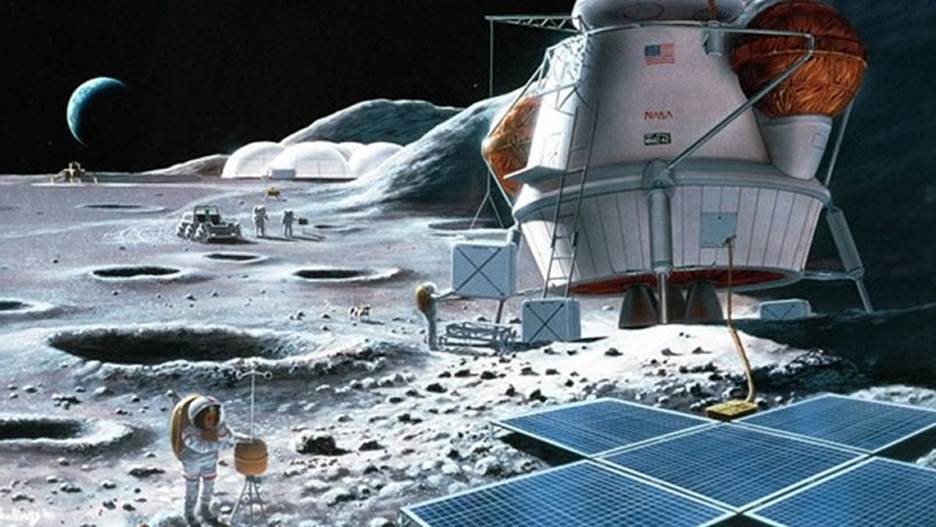
The new telescopes, such as the James Webb Space Telescope, enable scientists to look into the early universe and reveal planets, stars, and galaxies that for a long time remained unseen. The new findings from science are not only revealing new phenomena from space, but also motivating new scientists and engineers.
Science of Climate and Environmental Innovations
Another essential sector in which technology is leaving a mark is climate science. Sophisticated sensors, satellites, and computer models based on artificial intelligence enable scientists to monitor climate change, forecast weather conditions, and develop sustainable remedies.
First, new technologies are used for the production of clean energy, like advanced solar panels and more power-generating wind turbines. New technologies are required for a clean world and a clean future.
The Future of Science and Technology
The association between science and technology will become more acute in the years ahead. As new inventions in science based on the latest technology keep unfolding, we can eagerly look forward to quicker solutions and findings for some of mankind’s most pressing problems.
From quantum computation to nanotech, the future has no limits. Every new scientific finding leads us into a new one, forming a chain of inventions that serve the world at large.
Q1: How is technology assisting scientists in discovering new things?
Advances in technology provide scientists with advanced instruments, ultra-fast data computation, and distinct methods that provide them with an opportunity to conduct experiments fast and precisely.
Q2: List a few examples of the new technology in science.
Some examples are medical research using AI, CRISPR gene editing, space telescopes such as James Webb, and supercomputer-driven climate modeling.
Q3: Science and artificial intelligence, how are they connected?
AI helps in sifting through vast quantities of scientific data, predicting outcomes, and performing smarter experiments, thus more effective and efficient.
Q4: Why is biotechnology considered a breakthrough in science?
Biotechnology gives scientists the power to manipulate DNA and create treatments for genetic diseases, unveiling the potential for radical medical treatments.
Q5: How can one best keep abreast of new scientific findings?
The best means for staying up to date regarding findings is by staying current with science sites, journals, and tech news sites.