
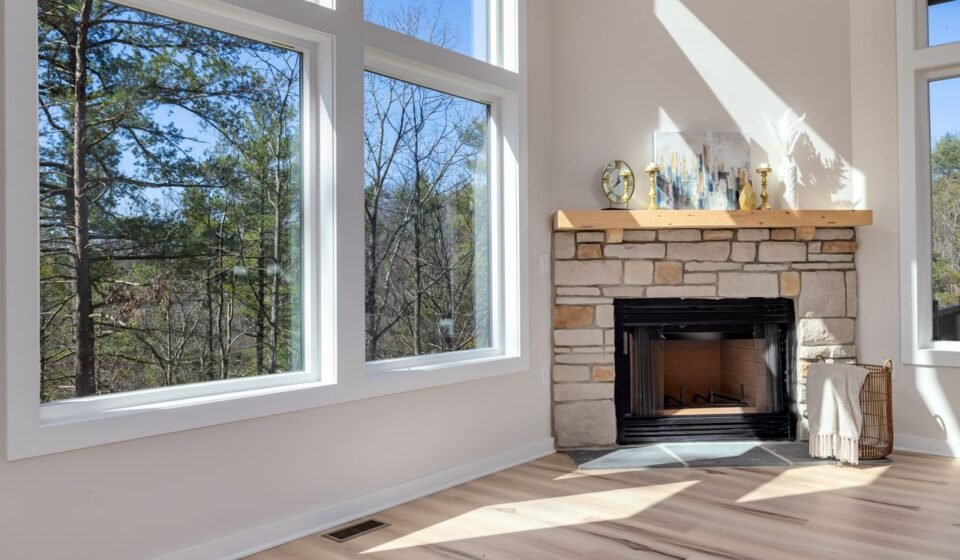

Smart windows technology 2026 sounds like something from a science-fiction house, but the idea is simple: glass that can change how much light and heat it lets through, at the touch of a button, or on its own when the sun gets strong.
Walk into a room with smart windows on a hot afternoon and the difference is obvious. The glare is gone, the room feels cooler, and nobody has pulled a blind down. The window did it. That is the whole promise, and for homes and offices that bake in the sun, it is a bigger deal than it first sounds. Smart windows technology 2026 makes that difference without blinds or curtains.
How Smart Windows Technology 2026 Actually Works
Most smart windows today use a technology called electrochromic glass. Inside the glass there is a very thin layer of material that changes colour when a small electric current passes through it. Turn the current on, and ions move across the layer, turning the glass a darker blue-grey. Turn it off, or reverse it, and the glass clears again.
The change is not instant, like a light switch. It takes a few minutes for a full window to go from clear to dark, which is fine, because the sun does not change in a second either. Once the window has reached the shade you want, it uses almost no power to stay there. That is why the technology works for a whole building, not just a single window.
There are other types too. Some windows react to heat alone, darkening as they get warmer. Some use tiny liquid crystals, like a television screen, and switch in seconds. But electrochromic glass is the one most often installed in real buildings in 2026, because it is the most reliable and the easiest to control.
What Smart Windows Do for a Home
The first benefit is comfort. A room with a large west-facing window can become unusable in the late afternoon, even with air conditioning. A smart window cuts the glare and the heat before it reaches the room, so the space stays usable all day without blinds blocking the view.
The second benefit is the energy bill. Cooling is one of the biggest costs in a warm home, and much of that heat comes straight through the glass. By blocking heat when the sun is strongest, smart windows can cut cooling costs noticeably, especially in homes with a lot of glass. They also help in winter, by letting the sun in when you want the warmth and blocking the glare when you do not.
The third benefit is simpler: no blinds, no curtains, and no dusting them. The view stays open, the light stays soft, and the room looks the same from the inside and the outside. That is why architects like them for modern homes, where a wall of glass is part of the design.
This is the same direction as the rest of the future home — systems built into the walls that quietly do their job, as described in our article on what homes will look like in 2035 (https://thinkforges.com/what-will-homes-look-like-in-2035/).
What They Cost, and What Still Holds Them Back
The honest problem with smart windows technology 2026 is price. A smart window still costs several times more than a normal double-glazed window, and the control system and wiring add to the bill. For a single window, that is hard to justify. For a whole house, or an office with a glass facade, the maths looks better, because the energy saving is bigger and the windows replace blinds that would have cost money anyway.
There are other limits. The tint is usually a shade of blue or grey, not a perfect neutral, so the view through a darkened window can look slightly coloured. The windows also need power and a control system, which means they need to be planned into a build or a renovation, not added as an afterthought. And if the control system fails, the window stays in its last state until it is fixed.
None of those problems is fatal, and all of them are getting smaller as more buildings install the glass and prices fall. But they are the reason most homes in 2026 still have ordinary windows, and will for a few more years. As smart windows technology 2026 spreads to more homes, prices should keep falling.
Are Smart Windows Worth It for You?
For most people, the answer today is: not for the whole house, but worth considering for the worst window. If you have one room that overheats every afternoon, or a home office where glare makes the screen unreadable, a single smart window can fix a daily annoyance that curtains never quite solved.
If you are building a new home or doing a major renovation, the case is stronger. The extra cost is a smaller share of the total build, the wiring can be hidden from the start, and the energy saving runs for the life of the house. In that case, ask the builder for a quote for the sunniest side of the house first, and compare it with the cost of good blinds plus the extra cooling.
Either way, do not buy smart windows for the novelty. Buy them for a specific problem: too much heat, too much glare, or a view you want to keep. If there is no such problem, ordinary glass and a good blind will do the same job for far less money. Smart windows technology 2026 is at its best when it solves a real problem in your home.
The Bottom Line
Smart windows technology 2026 works, and it does exactly what it promises: glass that tints itself, cuts glare, and keeps a room cooler without blocking the view. The price is still the barrier, not the technology. For a new build, or for the one window that ruins a room every summer, it is already worth a serious look. For everyone else, it is a technology to watch as prices fall — and a good example of how innovation in a home is often invisible, doing its work in the glass itself. The U.S. Department of Energy explains the energy-saving case for efficient windows in plain terms (https://www.energy.gov/energysaver/articles/energy-efficient-windows).