
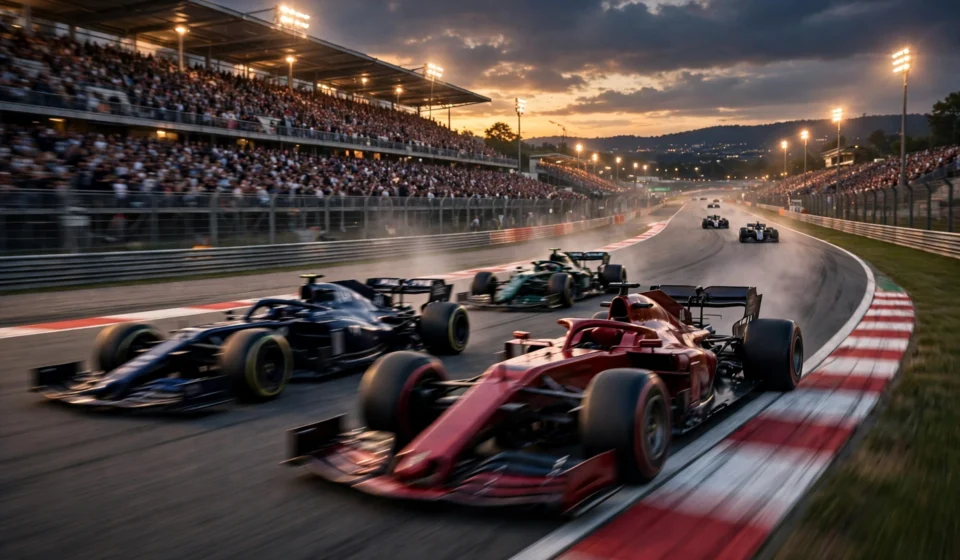

A Formula 1 race weekend had one simple shape: practice, qualifying, and one grand prix on Sunday. Then the sprint arrived, a short Saturday race that pays points before the main event has even started. Some fans love the extra action. Others think it cheapens the grand prix. F1 sprint races have been part of the sport for several seasons now, and the argument about them has only grown louder. So what exactly is a sprint, why does it split the fanbase, and what does it change about a race weekend?
What Is an F1 Sprint Race?
A sprint is a short race, roughly a third of a grand prix, around 100 kilometres, with no mandatory pit stop. It takes place on Saturday at selected rounds, six in the current calendar, where cars fight for position and points go to the top eight. Those points count towards both championships, so it is not an exhibition. The sprint used to set the grid for Sunday’s grand prix, but the format changed so qualifying for the main race is now separate, with its own shorter sprint qualifying session held on Friday.
How a Sprint Weekend F1 Fans See Is Different
A normal weekend gives teams three practice sessions to perfect the car; a sprint weekend gives them just one, after which the cars are locked into parc ferme conditions and teams can barely change the setup. Get the setup wrong on Friday morning and a team is stuck with that mistake for the sprint and the grand prix. That is why sprint weekends produce surprises: a midfield team that nails the setup can fight at the front, while a favourite that misses the window can spend the whole weekend out of position.
For fans, that unpredictability is either the best or the worst thing about F1 sprint races. It also changes how teams approach risk: in a normal weekend a driver can afford a cautious Friday, but in a sprint weekend every session counts from the first hour, and a crash in sprint qualifying can ruin two races.
Why Supporters Love F1 Sprint Races
The case for the sprint is simple: more racing. A traditional Friday is mostly practice: interesting to hardcore fans, dull for casual viewers. A sprint weekend replaces some of that with a real race, with real overtakes and real points, on Saturday. For fans who can only watch one day, F1 sprint races give Saturday something worth watching.
Supporters also say the sprint rewards a different kind of driver: with no pit stops and a short distance, there is nowhere to hide, drivers attack from the first lap, and the racing is closer than in a grand prix, where tyre management can turn the middle laps into a procession. The format has also produced memorable moments: surprise winners, bold overtakes, and midfield teams scoring points they would never have reached on a Sunday, a strong argument for a sport trying to grow its audience, especially younger viewers who expect action every time they tune in.
Why Critics Want It Gone
The case against the sprint is simple: it dilutes the grand prix. For decades, the Sunday race was the one event that mattered. Critics say the sprint turns the weekend into two half-races instead of one great one, and the main event feels less special after a race the day before.
There is also a fairness complaint: a sprint gives the top teams another chance to score points, stretching a championship lead, and gives drivers another chance to crash and damage a car before the race that really counts. Some drivers have said openly that the sprint adds risk without enough reward, since the points are small next to a grand prix win. Then there is the confusion factor: casual fans already struggle to explain practice, qualifying, and the race, and adding sprint qualifying, a sprint, and a separate qualifying session makes the weekend genuinely hard to follow, a real problem for a sport trying to welcome new fans.
What F1 Sprint Races Do to a Championship
F1 sprint race points sound small next to the 25 for a grand prix victory, eight for a win, seven for second, down to one for eighth, but across six sprints a season the total is 48 points per driver, almost two full race wins, and in a close championship fight that is easily enough to decide the title. The 2021 title battle, decided by a handful of points, is the example fans always reach for: a sprint swing either way would have changed it.
Supporters say that is fine, since the points are earned in a real race. Critics say it is wrong, since the sprint is a shorter, different kind of contest that should not carry the same weight as the main event. Sprint points have not yet decided a championship, but they have shaped several, and with six sprints a year, the day they do decide one feels like a question of when, not if.
The Money and the TV Audience
There is another reason the sprint is not going anywhere, and it has nothing to do with racing. Sprint weekends draw bigger Saturday television audiences, meaning more valuable broadcast rights and more attractive weekends for promoters. A Saturday with a real race sells more tickets than a Saturday with only practice, and host circuits have noticed. The people who run the sport look at viewing figures and see a success; the people who watch it look at the racing and see something that still needs fixing. Both sides are, in their own way, right.
Where the Format Goes Next
The Formula 1 sprint format has changed more than once, and it will probably change again. Separating sprint qualifying from grand prix qualifying answered fan complaints directly, and the sport has talked about further tweaks, including which circuits host sprints and how the points are shared out.
One idea is giving the sprint a clearer identity, perhaps as a standalone event with its own trophy, so it stops feeling like a warm-up for Sunday. Another is fewer sprints, keeping the format as a special occasion. What seems unlikely is a return to the old shape entirely: the sport has tasted the bigger Saturday audiences, and it is not going to give them up.
Like goal-line technology in football, which ended decades of argument about whether the ball crossed the line, the sprint was meant to make the sport better and ended up dividing the people who love it. Our look at how goal-line technology ended football’s biggest arguments shows how a new idea can split fans before becoming part of the furniture.
The same is true in esports, where esports training became as serious as traditional sports and the old guard had to accept a new format. F1 sprint races are not going away, but the argument about them is not settled either. The next few seasons will decide whether the sprint becomes a loved part of the weekend or a compromise nobody defends. Until then, fans will keep arguing, and on Saturday afternoons they will keep watching.