
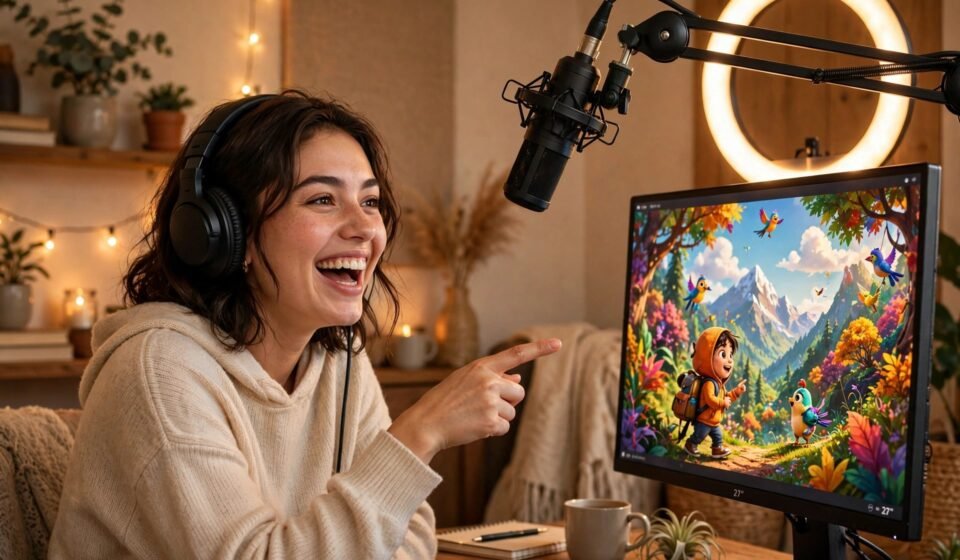

Open YouTube on any evening and you will find them near the top of the trending page: a person in a small window, watching a video, laughing, gasping, or tearing up while the rest of the screen plays something you have already seen. Reaction videos are one of the oldest formats on the platform, and by the usual rules of the internet they should have faded years ago. Instead, they are bigger than ever, pulling in millions of views for creators who never leave their rooms. The question of why reaction videos are so popular has a clear answer: psychology, community, and the way YouTube itself rewards the format.
Why Reaction Videos Are So Popular: Watching Together, Even When You Are Alone
The first reason reaction videos work is the simplest one: people like watching things with other people. A funny clip is funnier when someone else laughs at it. A sad scene hits harder when you can see it move someone. A shocking twist feels bigger when another face reacts to it at the same moment you do. Reaction videos recreate that shared experience for viewers watching alone, late at night, on a phone. The creator in the corner becomes a stand-in for a friend on the sofa next to you, and the video becomes a shared moment.
This is the core of reaction video psychology: humans are wired to mirror the emotions of the people around them, a process psychologists call emotional contagion. When you see someone laugh, your own mood lifts. When you see someone moved, you feel it too. A well-made reaction video uses that wiring deliberately: the creator is not just watching the clip, they are giving you permission to feel something about it, and their reaction tells you what that feeling should be. For first-time viewers, that guidance matters even more: the creator shows them which moments are funny, which are shocking, and which are worth attention.
The Shortcut to a New Audience
The second reason is practical, and it matters as much as the psychology. Reaction videos are one of the easiest formats for a creator to start and one of the cheapest to produce. There is no script to write, no set to build, and no crew to hire. The raw material already exists: a music video, a film trailer, a viral clip, a sports moment. The creator adds the one thing nobody else can: their own response. That low barrier is why so many new creators begin with reactions, and why the format never runs out of fresh faces.
It is also a shortcut to discovery: a reaction to a popular trailer or a hit song borrows the audience of the original, because fans search for reactions to it. A viewer searches for a reaction to their favourite artist, finds a creator they like, and stays for the next video. That discovery loop is a big part of why reaction videos are so popular with new creators: the audience of the original becomes the audience of the reaction.
Why People Watch Reaction Videos Instead of the Original
It is a fair question, and it sits at the heart of why reaction videos are so popular. If the clip is already online, why watch someone else watch it? The answer is that the viewer is not really there for the clip. They are there for the reaction. A fan wants to see their favourite artist’s new song land with someone hearing it for the first time. A horror fan wants to watch someone else get scared, and a viewer who already knows the twist wants to relive the surprise through someone else’s face. The original video is the excuse. The reaction is the content.
There is also a community effect. Reaction channels build regular audiences who return for the creator, not the clip. Viewers learn the creator’s tastes, laugh at their running jokes, and argue in the comments about which song was better or which scene was overrated. The comment section becomes a second show, and the creator often reads it and replies. A format that looks passive on the surface turns out to be one of the most interactive on the platform.
What the Best Reaction Creators Get Right
Not every reaction video works, and the ones that fail usually fail in the same ways. The most common mistake is reacting to something the creator clearly does not care about, which produces a flat, polite performance that viewers spot in seconds. The best creators pick material they genuinely love or genuinely hate, because a real opinion is what makes the video worth watching. A second mistake is talking over the clip so much that the viewer cannot hear it, or pausing so often that the video loses its flow. The best creators find a balance: they let the clip breathe, then jump in with a thought that adds something the viewer had not noticed.
Timing matters too. A reaction posted within hours of a trailer or a song release catches the wave of people searching for it. A reaction posted a week later is old news, because the audience has already found ten other reactions. That speed is part of the job, and it is one reason reaction channels publish so often.
The Criticism, and Why It Has Not Killed the Format
Reaction videos have critics, and some of the criticism is fair. Creators who add almost nothing to a clip, who pause it every few seconds to fill time, or who simply re-upload someone else’s work with a small face in the corner, are taking more than they give. YouTube has tightened its rules, and channels that add no real commentary can lose their ability to earn money from those videos. The format survives because the best creators do add something real: knowledge, humour, context, or an honest first impression.
The deeper reason why reaction videos are so popular is that the format is built on something permanent. People will always want to share what they love, and to see how others react to the things they care about. The technology will change, the platforms will change, and the clips will change. The impulse to watch together will not.
The Bottom Line
Reaction videos dominate YouTube because they do three things at once: they turn solo viewing into a shared experience, they give new creators a low-cost way to reach an audience, and they reward the honest, fast, and consistent creators who treat the format as a craft rather than a shortcut. The format will keep evolving, and the worst versions will keep getting pushed out. But the best reaction videos will keep working for the same reason they always have: watching something great is better with someone else. That is why reaction videos are so popular, and why the format keeps working year after year.
For the wider pattern behind videos that take off, see why some videos go viral and others do not. And for the quieter end of the same trend, the rise of silent vlogging shows how the opposite approach can work too.